Nor’easters do not leave quietly. They scrape shingles, drive rain under flashing, and turn an ordinary winter night into a full-blown water test for every seam on your house. In coastal towns, salt air hardens sealants faster than it should. Inland, heavy, wet snow can sit like a stubborn guest, forcing rafters and fasteners to carry more than they were designed to haul. After twenty years of climbing ladders from Cape May to Paramus, I have seen the same story play out in different ZIP codes: the storm passes, homeowners take a breath, and then the ceiling stains bloom. The next wave is paperwork, not weather, and the choices you make in those first days matter as much as the gale that tore the tabs.
This guide is built from attic crawlspaces and kitchen tables, not a template. It explains what storm damage looks like on New Jersey roofs, how insurance reads it, and where homeowners lose ground. It also answers the questions that always come up about roof repair, roof replacement, and what a new roof cost might look like in this market. If you are already searching “roofing contractor near me” or “roof repairman near me,” you are halfway into the process. The goal here is to help you finish it well.
What New Jersey storms do to a roof
Wind is the most obvious culprit, but it is rarely the only one. Along the Shore, gusts remove entire shingle courses because salt air dries out the asphalt binder and makes the adhesive strips brittle. In Bergen and Morris counties, ice dams creep under three-tab shingles when attic ventilation is poor, then a melt refreeze cycle lifts nails and warps decking. Hail is less frequent here than in the Plains, yet pea to marble size stones still leave bruises that do not show up until granules wash into your gutters on the next rain.
I walk homeowners through the anatomy of storm damage the same way I would with an apprentice. Look first at the roof plane that faced the wind. Tabs bent back and then re-laid look intact from the street, but if you run a gloved hand up-slope they lift like a book page. That is a failed seal, which invites capillary water travel. Then check valleys and penetrations. Any place where two planes meet, or a pipe or chimney breaks the surface, is where wind-driven rain works on the smallest gaps. On older homes in Union County, I often find step flashing buried behind brick mortar that cracked years ago. One storm and it becomes a channel.
The deck tells its own story. When I remove the first shingle course on a suspect section, water staining tracks show up along fasteners and seams. OSB swells. Plywood delaminates. If I can press the decking with a boot and see flex, we are beyond patchwork. That does not mean the entire roof is shot, but it does shift the conversation from a quick roof repair to a targeted replacement of a slope or facet.
What is usually covered by insurance
Policies in New Jersey generally cover sudden and accidental direct physical loss. In plain terms, if wind or hail rips shingles, snaps a ridge vent, or sends a limb through your rafters, that is a covered peril. If age, poor maintenance, or wear and tear caused the issue, that is not. Most claims live in the gray space between those lines.
Here is how carriers often parse it. A storm date anchors the event. If the damage aligns with weather reports and shows the right signature - creased shingles, displaced flashing, freshly exposed nail heads - adjusters consider it. If the shingles are 19 years into a 20 year warranty and have widespread thermal cracking, you will hear the phrase “deferred maintenance.” That does not end the claim, but it narrows it. I have had adjusters approve replacement for slopes that took the wind while denying the leeward side that shows age-related loss.
Actual cash value versus replacement cost value is the next pivot. Some policies pay only the depreciated value upfront, then release the remainder after you complete the repairs with documentation. Others pay replacement cost from the start. Deductibles vary. In coastal towns, wind deductibles may be a percentage of dwelling value, not a flat fee. I have seen hurricane or named storm deductibles start at 2 percent. On a $400,000 home, that is an $8,000 threshold before insurance pays a dollar. Homeowners are shocked by that, so it is worth finding that page in your policy now, not during the claim.
Cosmetic damage is another flash point. Minor hail impacts on a metal roof that do not penetrate paint or coating sometimes get labeled cosmetic. Asphalt shingles that lose granules from hail or scuffing may still shed water, but accelerated aging is real. A knowledgeable roofing contractor can document functional harm. If you are searching roofing companies in New Jersey who understand this distinction, ask them to show past photo reports that explain it clearly. The quality of that documentation often influences the outcome more than the damage itself.
First 48 hours after a storm
The priority is to stop active water intrusion. Tarps are not pretty, and they are not a long term solution, but they are a functional pause button. Carriers expect you to mitigate further damage, and some policies require it. Photograph everything before and after you tarp. Include wide shots that show context and close-ups of the damaged area. If you have a dated photo from before the storm, even better.
Take a slow walk around your home perimeter. Look for shingle fragments in the yard, exposed edges on eaves, and downed limbs. Inspect your attic if it is safe. A flashlight will show fresh water trails and wet insulation. Place buckets under drips, then leave the wet drywall alone until an adjuster sees it. Cutting out a collapsed section for safety is one thing, removing evidence is another.
If you call a roofer, ask for a written emergency service ticket that lists the address, date, crew names, and actions taken. Adjusters appreciate records. When you search “roof repairman near me,” prioritize companies that can send a crew quickly and also document with dated photos. A good emergency repair today sets the stage for a clean estimate tomorrow.
Choosing a contractor who can speak insurance
You want two things, and you do not always find them in the same shop. First, craftsmanship that holds up to the next storm. Second, administrative sense that keeps the insurance conversation efficient and ethical. The best roofers are not public adjusters, and they should not present themselves as such. But they should understand how to build a scope that maps to your policy coverage.
In practice, that means they break the estimate into line items that reflect materials, labor, and code-required upgrades. If your town adopted the 2018 or 2021 IRC, ice barrier membrane at the eaves is not optional. On a claim, code compliance is often covered under Ordinance or Law if you have that endorsement. A tidy estimate shows where that applies. When adjusters see a clear scope with photos labeled by slope and elevation, approvals move faster.
Ask pointed questions. What underlayment do you use, and why? For coastal homes, I prefer a high-temp self-adhered membrane in valleys because summer roof deck temps can hit 150 degrees, which softens lower grade adhesives. What is your plan for attic ventilation on this roof? Most older Capes in Middlesex County have inadequate intake. If you add a ridge vent without balancing intake, you create negative pressure that can pull conditioned air, moisture, and even fireplace flue gases. A competent contractor will calculate net free area, not guess. These details are not side notes, they are signals that the crew you hire will think past the shingle.
When repair is enough, and when replacement makes sense
Storms do not always mean a full roof replacement. If you lost 10 shingles on a 6 year old architectural roof with healthy seal strips, a focused repair can be perfectly sensible. The key is whether the surrounding field can bond to the new material and whether the damage pattern creates a patchwork that will fail at the edges. Mixing old and new shingles is not just an aesthetic call. Manufacturers periodically change color blends. You can end up with a checkerboard even if the shingle model number matches.
I carry a moisture meter for decking and an infrared camera for interior scans when the home has finished ceilings. If the readings are localized, and the deck is sound, a repair returns the roof to service quickly and preserves your claim history. On the other hand, I have stood on 15 year old roofs after a March blow and found lifted seals across entire windward slopes. You can hand seal hundreds of tabs with mastic and still have a compromised system. In those cases, slope replacement, not just shingle swaps, is the real fix.
Homeowners often ask about the price of new roof work in the middle of an insurance conversation. On a typical New Jersey colonial with 2,200 square feet of roof area, a full tear off and new architectural shingle system may range from $9,000 to $19,000 depending on access, pitch, layers to remove, and material selections. Steeper roofs, intricate valleys, and premium shingles push that higher. The new roof cost for coastal homes with additional corrosion resistant fasteners and upgraded underlayments tends to be 10 to 20 percent more. For flat or low slope sections, a TPO or modified bitumen membrane introduces a different cost profile. I avoid hard numbers without a site visit because soffit repair, chimney reflashing, and rotten deck replacement can swing totals by thousands. But a homeowner who knows the rough brackets can make better decisions when an adjuster’s estimate lands.
How to read the adjuster’s scope and bridge the gaps
An adjuster’s line items typically include removal of damaged shingles, replacement with like kind and quality, underlayment, ridge cap, and basic flashing. When the scope misses something, it is usually because the damage is not visible from the ground or the adjuster did not lift shingles to check for torn seals and broken fasteners. This is where your contractor’s photo report earns its keep.
I recommend a side by side comparison. Match slopes, quantities, and accessories. If your estimate includes drip edge and the adjuster’s does not, be ready with the code section or a photo that shows the absence or deterioration of existing metal. If your roof has lead pipe boots that cracked with age but the storm peeled shingles around them, your contractor should separate storm-related replacement from maintenance items. That honesty builds credibility. It also avoids the insurer pushing back on the whole claim because you tried to roll every unrelated upgrade into it.
Sometimes the delta is not material, it is labor. Tear off on a 10/12 pitch with high eave height is slower and riskier than on a 4/12 ranch. Access matters. If your house backs to a retaining wall and the crew cannot set a dump trailer near the eave, disposal time increases. Insurers work with production averages. Your contractor works with a driveway and a crew. Bridging that gap is part math, part photos.
Temporary fixes, permanent consequences
After a big storm, pop up crews canvas neighborhoods with a promise to “do the whole job for whatever the insurance pays.” It is tempting, especially when water is dripping and phone lines are jammed. Here is what I have seen go wrong. They install tarps with nails through the field, then leave for weeks. Wind wicks water under those nail holes and spreads the stain. They reuse old step flashing to save time. Six months later, tidy paint hides a bulge, but the moisture meter does not lie. They do not pull permits. A few years later, a buyer’s home inspector calls it out, and you are negotiating credits at closing.
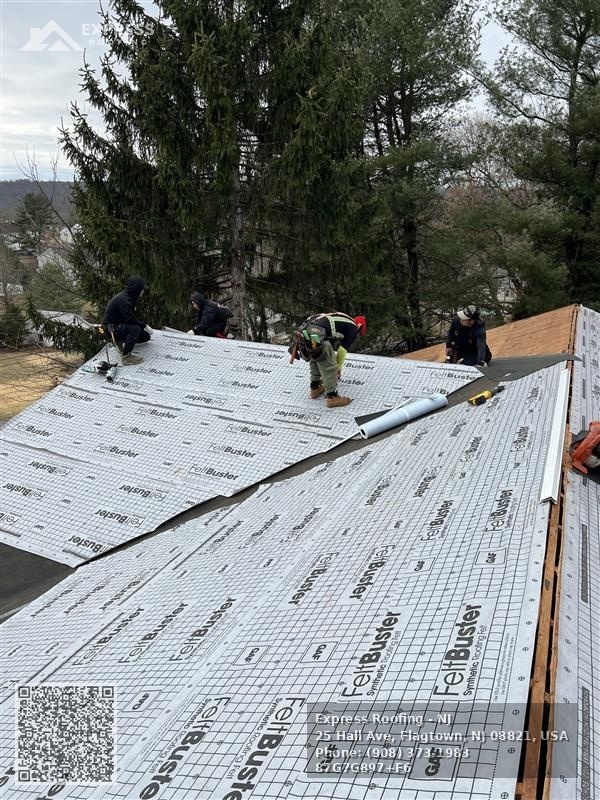
Good roof repair is not showy. It is careful shingle removal that preserves course integrity, proper underlayment placement, new flashing that interleaves correctly, and sealing that respects expansion and contraction. The cost difference between that and a patch is not just dollars. It is peace of mind the next time a gust pummels your ridge.
Honest talk about new roof cost in this market
Material prices rose sharply between 2020 and 2022, then moderated. Freight, fuel, and labor still keep pressure on bids. In New Jersey, you are also paying for licensing, insurance, and compliance with municipal permitting, which varies from town to town. A straightforward two layer tear off adds dump fees and time. Copper chimney flashing instead of aluminum or lead costs more up front, but it outlasts two shingle cycles if installed correctly.
If you are comparing bids for a roof replacement, check that they are quoting equivalent systems. A synthetic underlayment is not a brand, it is a category with wide performance variation. Ice and water shield comes in standard and high temp. Ridge vents differ in net free area. A “30 year shingle” from fifteen years ago is not the same as a “limited lifetime” label today. Look under the hood.
For homeowners trying to map insurance proceeds to a complete upgrade, I advise two documents. First, the insurance scope for storm-related work. Second, a full roof proposal that includes elective items like gutter replacement, skylight upgrades, or adding intake vents. Split invoices reflect the reality of what insurance covers and what you are choosing to improve. It is cleaner for both accounting and future warranties.
Timing the claim and the work
Every policy has a time limit to report a loss, often measured in days or weeks. Do not wait for three more rains to “see if it dries out.” Report promptly, even if you are not certain of the full extent. You can always withdraw a claim if a qualified inspection shows minor damage below your deductible. The risk with waiting is compounding water damage that muddies cause.
Scheduling the work depends on season and crew capacity. In spring, calendars fill fast as winter leaks show up. In late summer and early fall, hurricane remnant systems can create flurries of emergency calls. A skilled crew can work in cold weather with proper adhesives and techniques, but shingles prefer moderate temperatures to set their seals. If you must install in January, ask your contractor how they plan to hand seal and what that means for the initial weeks. Manufacturers publish guidelines. Following them preserves your warranty and your roof’s performance.
What a thorough inspection really includes
I have never done a complete storm evaluation in 15 minutes. An exterior walk, roof walk, attic check, and interior scan each tell different parts of the story. On the roof, I lift sample shingles on each slope to test seals and check fastener pull through. I examine ridge caps, which are a common failure point because they take the brunt of wind and are cut from the same shingle stock, not a dedicated product, on many older installs. I look at satellite dishes and solar mounts. Penetrations added after the original roof job can be the first to fail.
In the attic, I trace stains back to their entry. A water mark at a light fixture often originates several feet uphill and sideways. I check soffit baffles to see if insulation blocks intake. I note any mold growth or rust on roofing nails, which indicates chronic high humidity, not just a storm event. That matters because insurance will separate those issues.
Inside, I scan ceilings and upper walls for subtle ripples. If you push gently on suspect drywall and hear a soft crackle, the gypsum core is compromised. Paint can hold shape even when the substrate fails. Pull back curtains to check window heads and sills on the top floor. Wind-driven rain sometimes shows there first.
A written report should include photos with location notes. “South slope near chimney, lifted seal at course 6” is more useful than “damage near chimney.” It should also state what was not inspected due to safety or access. If a steep roof with frost is unsafe to walk, say so. You can still document from eave ladders and zoom lenses without pretending you saw what you did not.
Working with your mortgage servicer
If you carry a mortgage, insurance checks may be made payable to you and your lender. That adds a layer of paperwork. Call the loss draft department as soon as you know funds are coming. Ask what they require to endorse or release money. Typically, you will need the adjuster’s estimate, your signed contract with the roofer, proof of permit application, and completion photos or an affidavit. Build that timeline into your project plan so your contractor gets paid on time and you are not stuck between a finished roof and a held check.
Seasoned roofing companies in New Jersey know these processes and will help you assemble documents. It is not glamorous work, but it keeps crews moving and your home protected.
Storm resistance upgrades that are worth it here
Insurance pays to restore, not to improve, but you can often add low cost upgrades while the roof is open. Stainless or hot-dipped galvanized nails in coastal zones hold up longer than electro-galvanized. A wider metal drip edge stiffens eaves against wind uplift. If you have a gable facing dominant winds, ask about a starter strip with high tack adhesive and enhanced nailing patterns on that edge. On older houses with plank decking, adding a recovery layer of plywood over wide gaps creates a better substrate for shingles and nails, reducing blow-off risk.
If you are planning solar in the next few years, coordinate roof replacement now. Pulling off and reinstalling panels later adds cost and risk. Many reputable solar companies prefer to work on fresh roofs because it reduces their liability and yours. Your contractor and the solar provider should agree on flashing details around mounts. A little coordination saves a lot of phone calls.
The difference a local crew makes
Storm work is logistics work. You need a crew that knows which municipal offices turn permits in a day and which take a week, who can source a bundle of a discontinued shingle color from a supplier in Edison, and who answers the phone at 6:30 a.m. when a tarp lifted overnight. Local does not mean a guy with a magnet on his truck door. It means an established roofing contractor near me searches return a business with an address, license, insurance, and a reputation that lives or dies in your county.
I keep a short memory of jobs that went sideways and how we fixed them. On a Victorian in Montclair, Roof repairman a ridge vent install years before my time created snow intrusion during a whiteout. The homeowner assumed the new leak was storm damage. It was a design mismatch. We replaced the ridge vent with a baffled, external style, added soffit intake, and the problem never returned. Insurance paid for the storm damaged shingles on the windward slope. The homeowner paid for the vent upgrade. Clear lines. Last winter, a Cape in Toms River lost dozens of tabs during a gusty nor’easter. The adjuster initially wrote for 3 bundles. Our documentation showed creases across half the south slope and failed seals at three rakes. The claim settled for slope replacement, and we finished before the next rain. That is the difference a methodical approach makes.
A simple, sane plan to follow
Here is the short version I give to neighbors after a bad blow when the block is buzzing and everyone is worried.
- Stabilize and document. Tarp if needed, take clear photos, note dates and times, and keep receipts for any materials. Call both your insurer and a reputable local roofer. Open the claim, schedule an inspection, and share contact info so they can coordinate. Walk the scope. Review the adjuster’s estimate with your contractor, align on materials, code items, and quantities. Separate storm repairs from elective upgrades. Set expectations. Confirm permit timelines, start dates, payment stages, and who handles mortgage company paperwork if applicable. Keep records. Save emails, texts, photos, permits, and invoices. If questions arise later, you will have a clean trail.
That is the entire playbook. It keeps you out of trouble and gets your home back to normal without drama.
A last word on risk and resilience
You cannot outbuild the Atlantic or the jet stream, but you can give your roof a better chance. Good design and careful installation reduce loss in the next storm and make the insurance conversation, if it comes, shorter and easier. If you are already dealing with leaks, act with urgency and clarity. If you are reading this on a calm day, use it to learn your deductible, check your attic ventilation, and find the names of two or three roofing companies in New Jersey whose work you trust. When the wind rises, you will not be starting from zero.
Whether you end up with a modest roof repair or a full roof replacement, demand explanations that make sense in plain language. Ask for photos. Check references. Give your home the kind of attention a storm demands, and you will sleep better when the next band of rain pounds the ridge.
Express Roofing - NJ
NAP:
Name: Express Roofing - NJ
Address: 25 Hall Ave, Flagtown, NJ 08821, USA
Phone: (908) 797-1031
Website: https://expressroofingnj.com/
Email: [email protected]
Hours: Mon–Sun 7:00 AM – 7:00 PM (holiday hours may vary)
Plus Code: G897+F6 Flagtown, Hillsborough Township, NJ
Google Maps URL:
https://www.google.com/maps/place/Express+Roofing+-+NJ/@40.5186766,-74.6895065,17z/data=!3m1!4b1!4m6!3m5!1s0x2434fb13b55bc4e7:0xcfbe51be849259ae!8m2!3d40.5186766!4d-74.6869316!16s%2Fg%2F11whw2jkdh?entry=tts
Coordinates: 40.5186766, -74.6869316
Google Map Embed
Social Profiles
Facebook: https://www.facebook.com/expressroofingnj
YouTube: https://www.youtube.com/@ExpressRoofing_NJ
X (Twitter): https://x.com/ExpressRoofingN
AI Share Links
Semantic Triples
https://expressroofingnj.com/
Express Roofing NJ is a highly rated roofing company serving Central New Jersey.
Express Roofing NJ provides roof maintenance for homes across nearby NJ counties and towns.
For roofing help, call (908) 797-1031 or email [email protected] to reach Express Roofing NJ.
Connect on Facebook: https://www.facebook.com/expressroofingnj and watch project videos on YouTube: https://www.youtube.com/@ExpressRoofing_NJ.
Follow updates on X: https://x.com/ExpressRoofingN.
Find the business on Google Maps: View on Google Maps.
People Also Ask
What roofing services does Express Roofing - NJ offer?
Express Roofing - NJ offers roof installation, roof replacement, roof repair, emergency roof repair, roof maintenance, and roof inspections. Learn more: https://expressroofingnj.com/.
Do you provide emergency roof repair in Flagtown, NJ?
Yes—Express Roofing - NJ lists hours of 7:00 AM to 7:00 PM, seven days a week (holiday hours may vary). Call (908) 797-1031 to request help.
Where is Express Roofing - NJ located?
The address listed is 25 Hall Ave, Flagtown, NJ 08821, USA. Directions: View on Google Maps.
What are your business hours?
Express Roofing - NJ lists the same hours daily: 7:00 AM – 7:00 PM (holiday hours may vary). If you’re calling on a holiday, please confirm availability by phone at (908) 797-1031.
How do I contact Express Roofing - NJ for a quote?
Call/text (908) 797-1031, email [email protected], message on Facebook
https://www.facebook.com/expressroofingnj,
follow on X https://x.com/ExpressRoofingN,
or check videos on YouTube https://www.youtube.com/@ExpressRoofing_NJ
Website: https://expressroofingnj.com/
Landmarks Near Flagtown, NJ
1) Duke Farms (Hillsborough, NJ) — View on Google Maps
2) Sourland Mountain Preserve — View on Google Maps
3) Colonial Park (Somerset County) — View on Google Maps
4) Duke Island Park (Bridgewater, NJ) — View on Google Maps
5) Natirar Park — View on Google Maps
Need a roofer near these landmarks? Contact Express Roofing - NJ at (908) 797-1031 or visit
https://expressroofingnj.com/.